Beekeeping

Best Beekeeping Gloves of 2026

Bees find the weak point in your kit, and on most beekeepers it's a glove — slick at the fingertips, thin at a seam, or cut so short that the cuff slides down the moment you reach into a brood box. A good pair does two jobs at once: it stops the sting and it lets you feel what you're holding, so you can lift a frame, spot the queen, and set things back gently. Get that balance wrong in either direction and inspections turn tense, for you and for the colony.

I keep hives at the edge of my yard, and the difference between a glove you trust and one you don't shows up within the first five minutes. Over the past seven months, my team and I worked through 15 pairs in our own apiaries — leather, nitrile, and ventilated mesh — and the same few things separated the good from the frustrating: you could feel a frame through them, the cuff stayed put at the wrist, and nobody got stung. The picks below are the ones that passed.

1

Forest Beekeeping Goatskin Gloves

Top Pick
Forest Beekeeping Goatskin Gloves

All-round hive work

Our Score 9.0/10
Check Price

Worth Noting

  • Cut runs large; measure before ordering
Sizes
XS to 2XL
Sleeve
Elbow-length cotton canvas with elastic cuff
Ventilation
Breathable mesh between hand and sleeve
Palm Material
Goatskin leather
Read the full review

Six sizes is what put these at the top of our list. Most hive gloves come in three, which leaves anyone with small hands or a wide palm choosing between a glove that swims and one that pinches — and a glove that pinches comes off halfway through an inspection, usually at the worst possible moment. XS through 2XL covers hands the usual small-medium-large spread misses entirely.

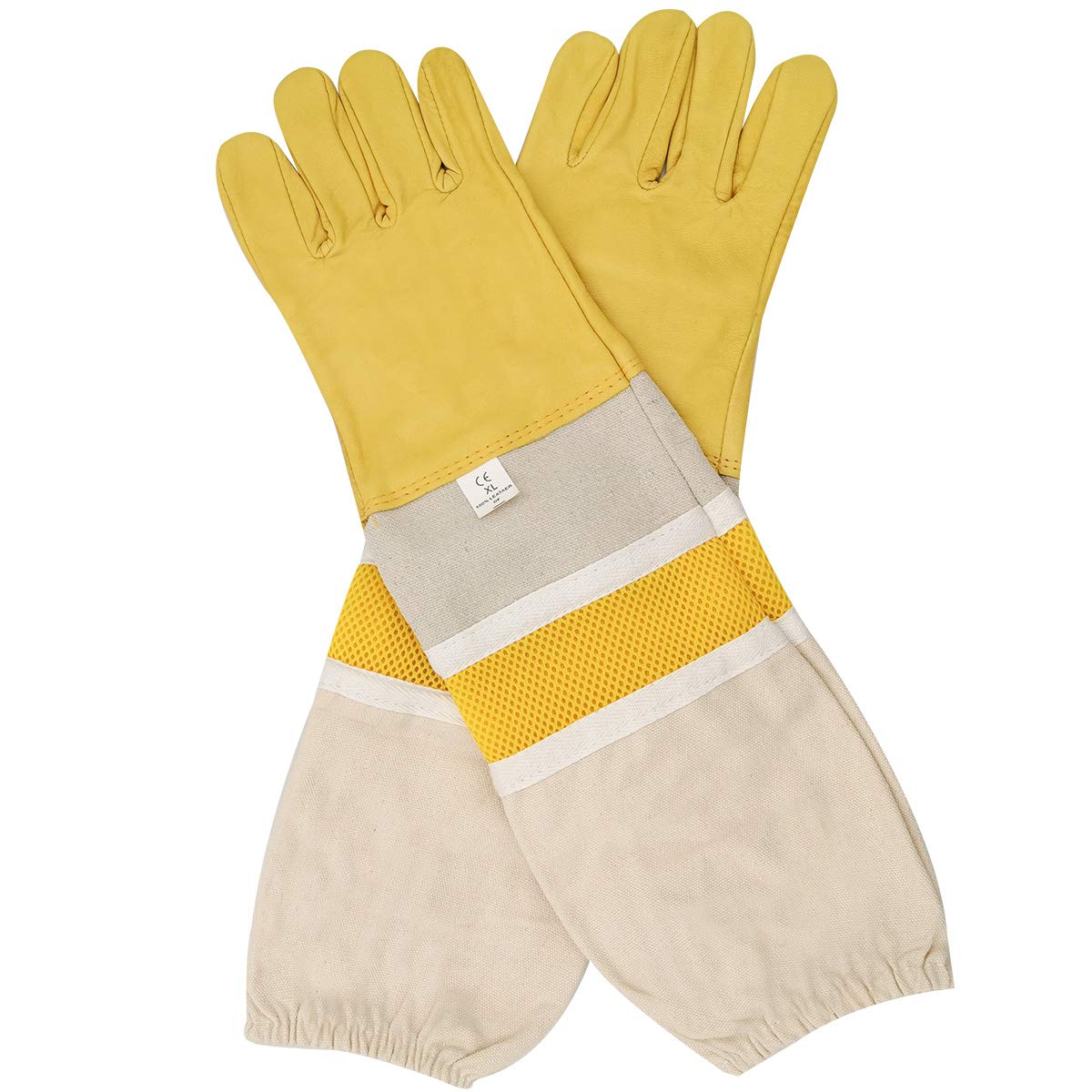
The rest of the build is straightforward and well judged: a goatskin leather hand, a supple cotton canvas sleeve that reaches the elbow and closes with an elastic cuff. We paid close attention to the fingers, because that's where cheaper gloves betray you, and these are cut with room rather than bunching at the knuckles, so you can grip and turn a frame without the leather fighting back. The goatskin is soft from the first wearing, which matters more than it sounds — stiff leather makes you clumsy, and clumsy hands drop frames.

Between the glove and the sleeve there's a mesh panel, and the placement is smarter than it looks. The wrist is where heat builds up under a cuff on a July inspection, so venting there does more for your comfort than thinning the leather over the back of the hand would. It's the kind of detail you notice only when you're wearing a glove that doesn't have it.

The care instructions are hand wash, cold water, mild soap, air dry — worth following properly, because machine washing is what kills leather gloves. Do that after a hot inspection and the leather stays soft instead of going crusty at the fingertips.

Bottom line: Six sizes, supple goatskin and a vented wrist make these the pair we point most hobby beekeepers to — the size range is what settles it.

2

Apis Tactical 5mm Cowhide Gloves

Apis Tactical 5mm Cowhide Gloves

Defensive hives

Our Score 9.0/10
Check Price

Worth Noting

  • Bulk slows fine work like finding a queen
Cuff
Extended cuff
Ventilation
Ventilation panels
Palm Material
5mm cowhide
Read the full review

There's more glove here than anywhere else in this set. The hand is 5mm cowhide — the only pair here that states a leather thickness — with an extended cuff that runs a long way up the forearm and ventilation cut into the back of the glove.

We think it's the pair for a hive that meets you at the entrance. Thick cowhide shrugs off stings and propolis scrapings alike, and the long cuff closes the wrist gap where a determined bee finds its way in. The trade is feel: lifting a single frame out of ten, hunting for a queen, working a marking cage — all of it is clumsier than in the goatskin gloves here. On a defensive colony you want the glove you can afford to be slow in, and this is that glove.

The vents matter more than we expected. Cowhide this thick traps heat, and the panels are the difference between a glove you keep on through a full inspection and one you peel off at the lid. The cut is close rather than baggy, with no loose fingers hanging past yours, and the cuff stays where you put it instead of sliding down your forearm.

It's the priciest pair in this set, and the money is in the leather and the cuff rather than in extras. If you keep one heavy pair for bad days and something suppler for calm ones, this is the heavy pair.

Bottom line: Buy these for a colony that comes at you: the thickest leather in the guide, a cuff that covers the wrist gap, and enough ventilation to keep them on.

3

Humble Bee 110 Goatskin Gloves

Humble Bee 110 Goatskin Gloves

Fine frame work

Our Score 9.0/10
Check Price

Worth Noting

  • Sleeve seams and elastic can fail with hard use
Cuff
Elastic
Warranty
2 years
Palm Material
Goatskin leather
Fabric Composition
60% cotton canvas / 40% goat leather
Read the full review

The goatskin on these is the softest leather in this set, and we found no break-in period at all — no stiffness across the knuckles, no fumbling for the first few inspections. Canvas runs up the arm and the elastic cuff keeps it there, so the sleeve stays over a suit instead of riding down your forearm.

Dexterity is the reason to buy them. Of the gloves here, these give the best finger feel: enough to pick up a frame by its lug, feel for a queen, or work a cage without stripping the glove off to do it. If you have ever taken a glove off mid-inspection and regretted it, this is the pair that keeps you covered through the fiddly parts of the job.

Fit is the catch, and it's big enough to plan around. These run small against their own chart, in some cases a full size, so measure your hand rather than trusting your usual glove size and expect to go up. The forearm opening is narrow, too, which is worth knowing if your suit sleeves are bulky — try them on over the suit before the first inspection rather than at the hive.

The two-year manufacturer warranty is the longest backing on any glove in this guide, and it's a large part of why these stay on our list despite the sizing quirks. Hand wash only, as with every leather glove here.

Bottom line: For beekeepers who work barehanded as often as gloved, these give the closest thing to bare-handed feel in this set — supple goatskin, long sleeves and a two-year warranty.

4

DZXZY Goatskin Beekeeping Gloves

DZXZY Goatskin Beekeeping Gloves

Budget spare pair

Our Score 8.6/10
Check Price

Worth Noting

  • Stitching can give out at the fingertips
Cuff
Elastic
Size
X-Large
Sleeve
Extra-long ventilated canvas
Palm Material
Goatskin leather
Read the full review

These cost the least of anything in this guide, and that's the honest frame for them: a spare pair for the truck, a pair for a neighbor who wants to watch, a first pair while you decide whether beekeeping is going to stick. Goatskin, an extra-long ventilated canvas sleeve, elastic cuffs — the recipe is the same as gloves costing far more.

We were pleasantly surprised by the leather. It's supple enough to feel a frame through, and the sleeve is genuinely long rather than the token cuff some budget gloves ship with, which is the part that actually keeps bees off your forearm.

The cut is where the savings show. These run slim and small, so take the larger size if you're between two, and don't plan on a liner underneath. For a glove that lives in the truck and comes out when a swarm lands somewhere awkward, that's an easy trade to make.

Bottom line: The pair to buy in multiples: real goatskin and a long ventilated sleeve for very little, best kept as a spare or a first glove.

How We Tested the Best Beekeeping Gloves

We started with about 40 styles on a spreadsheet — leather, goatskin, nitrile-coated knit, and ventilated mesh — and narrowed that list by gauntlet length, whether the maker published an actual sizing chart, seam construction, and price before ordering 15 pairs in a range of sizes.

Testing ran from April through October, a full season that started with the first spring build-up inspection and ended at the fall harvest. The gloves went into two backyard apiaries and a friend's farm: reaching deep into a crowded brood box during a strong flow, catching a swarm off a low crabapple branch, heaving full honey supers on a hot July afternoon, and working hives through the late-summer dearth, when the bees are at their least forgiving. Every pair was washed and hung to dry at least once a month and came back out for the next inspection.

Before assigning sizes, we measured each tester's palm and middle finger and compared the numbers to the maker's chart; one tester with wide palms and short fingers tried the same pair as a tester with narrow hands to see where the fit fell apart. In the field we counted stings and noted where they landed, picked up a single dead bee and a queen cage, unclipped and re-clipped a hive tool, and cracked a propolis-sealed inner cover to see whether a fingertip could feel the edge. Back home we inspected seams, cuffs, and fingertips after every wash, and paid attention to which gloves left hands clammy by the third frame — then judged at the end of the season whether each pair had earned its price.

How to Choose Beekeeping Gloves

Start With Fit, Not Leather

Every glove in this guide will stop a bee; the ones you keep wearing are the ones that fit. Measure around the widest part of your palm and compare that number to the maker's own chart rather than ordering your usual work-glove size, because these charts disagree with each other by a full size in both directions.

It's also worth counting the sizes on offer. Three sizes is where bad fits start, since most hands fall between them. Our top pick runs XS to 2XL, which is unusual enough that it decided the ranking; if you have small hands or a wide palm, start there and work outward.

Goatskin or Cowhide?

Goatskin is the softer leather, and softness converts straight into feel: you can grip a frame, find a queen and work a cage without pulling the glove off. It also wears faster at the fingertips. Cowhide is thicker and more abrasion resistant, which is what you want for scraping propolis, levering boxes apart and a colony that comes at you.

If you keep one pair, buy goatskin. If you keep two, make the second a thick cowhide for the bad days and the heavy lifting — the Apis pair here is the obvious candidate.

Sleeve Length and the Wrist Gap

A sting almost never goes through a leather palm; it goes in at a gap. Look for a sleeve that reaches the elbow and a cuff that overlaps your suit rather than stopping short of it, and check the opening before you commit: a long, narrow sleeve can bunch at the wrist and refuse to slide over a bulky suit cuff, which is a problem you only discover at the hive.

Try new gloves on over the suit you actually wear, not over a bare forearm.

Seams, Care and What to Check

The first places to fail are the fingertips and the seam where the sleeve meets the hand. Run a thumb along each finger seam when the gloves arrive and send back anything with loose thread, because a split seam is a sting, not an inconvenience. Wash by hand in cold water with mild soap, air dry away from heat and sun, and skip the machine entirely.

None of these gloves is waterproof, so a wet inspection leaves you with heavy leather that takes a day to dry. A second pair solves it.

Frequently Asked Questions

Final Verdict

Buy the Forest gloves. Six sizes mean you can actually get the fit right, the vented goatskin is soft enough to work in from the first inspection, and the sleeve is long enough to lap over a suit — that combination covers most hobby hives on most days.

If your bees are defensive, or your inspections are mostly scraping and box-lifting, the Apis Tactical's thick cowhide is worth the loss of feel. And if you want a second pair for a helper or the truck, the DZXZY does the job for very little.