Beekeeping

Best Beehive Kit of 2026

A beehive kit looks like a stack of plain wooden boxes until you're the one holding the screwdriver. The worry I hear most from new beekeepers isn't about the bees at all — it's that the pieces won't go together square, that the dovetails will leave gaps, and that the colony will spend its first season patching your work instead of drawing comb. A good kit ends that worry before it starts.

I've kept hives in my own backyard for years, and every build still teaches me something. Over the past eight months, my team and I assembled nine kits and ran them through a full season — from bare-bones starter stacks to heavier furniture-grade boxes — tracking how each went together, held up, what it cost once the missing pieces were added, and whether bees actually moved in. One thing I'd tell any first-time buyer: the wax coating matters more than the wood species, since bees draw comb fastest on foundation with a real coat of wax rather than a thin sheen. The kits below are the ones that got out of the way.

1

Honey Lake 10-Frame 4-Layer

Top Pick
Honey Lake 10-Frame 4-Layer

First full season

Our Score 9.6/10
Check Price

Worth Noting

  • Forty frames make for a long build
  • Hive only, with no tools, smoker or suit
Wood
Cedar
Frames
40
Foundation
Wax-dipped plastic
Hive Boxes
2 deep + 2 medium
Read the full review

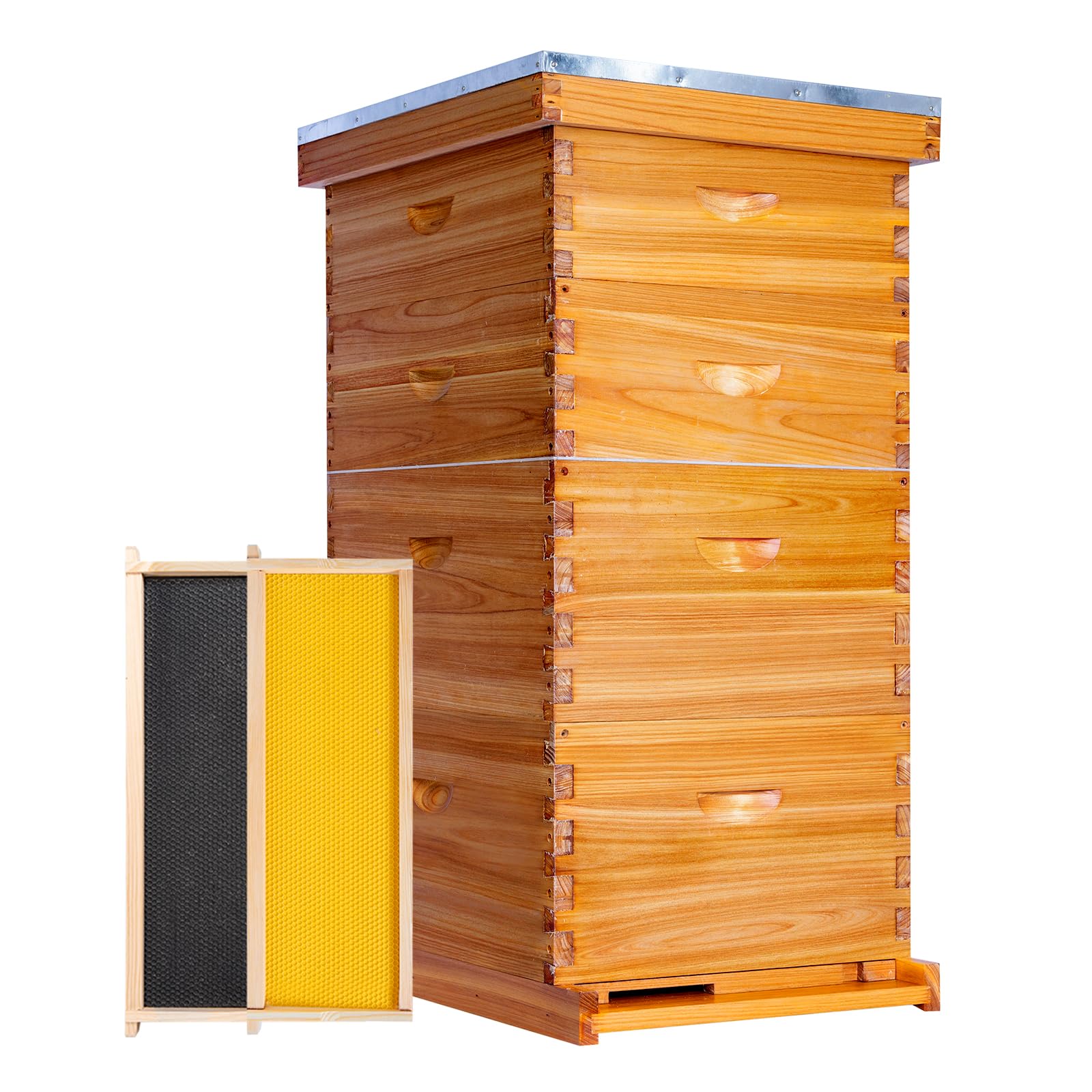
Four boxes is what separates this kit from most of the starter hives here. Honey Lake ships two deep brood boxes and two medium supers, 40 wooden frames and 40 pre-waxed plastic foundation sheets, so when the brood nest fills in early summer you are not hunting for a matching super from a different maker. The whole thing follows standard Langstroth dimensions, so anything you add later stacks.

We like the way it is finished. The cedar is beeswax-coated rather than painted, the dovetails are pre-cut and the screw holes pre-drilled, and the foundation arrives waxed so the bees start drawing comb on it instead of ignoring it. Of the kits we built, this is the one we hand a first-year beekeeper first, because the extra depth of hive is what a colony actually uses in its first season rather than its second.

The honest price of that completeness is a long build. Forty frames means forty small assemblies, glue, nails, foundation sheet, repeat, before you ever open the lid, and the four boxes add an evening on top. Set up a table, buy a bottle of wood glue, and treat it as a winter job done well ahead of your bees. Skipping the glue is what makes frames rattle apart two seasons in.

One point worth settling early: a deep of this loaded with comb and honey is not something you carry across a yard. Pick the final spot and put a stand under it before the colony arrives, because that decision gets a lot harder once there are bees in the box.

Bottom line: We recommend the Honey Lake kit to anyone starting a first hive who wants one order to cover the whole first season, not just the first month.

2

MayBee 10-Frame 2-Layer

MayBee 10-Frame 2-Layer

Second hive

Our Score 9.4/10
Check Price

Worth Noting

  • Two boxes fill quickly in a good year
  • Some boards arrive split or knotted
Wood
Wax-coated cedar
Frames
10 deep + 10 medium
Foundation
Waxed plastic
Hive Boxes
1 deep + 1 medium
Read the full review

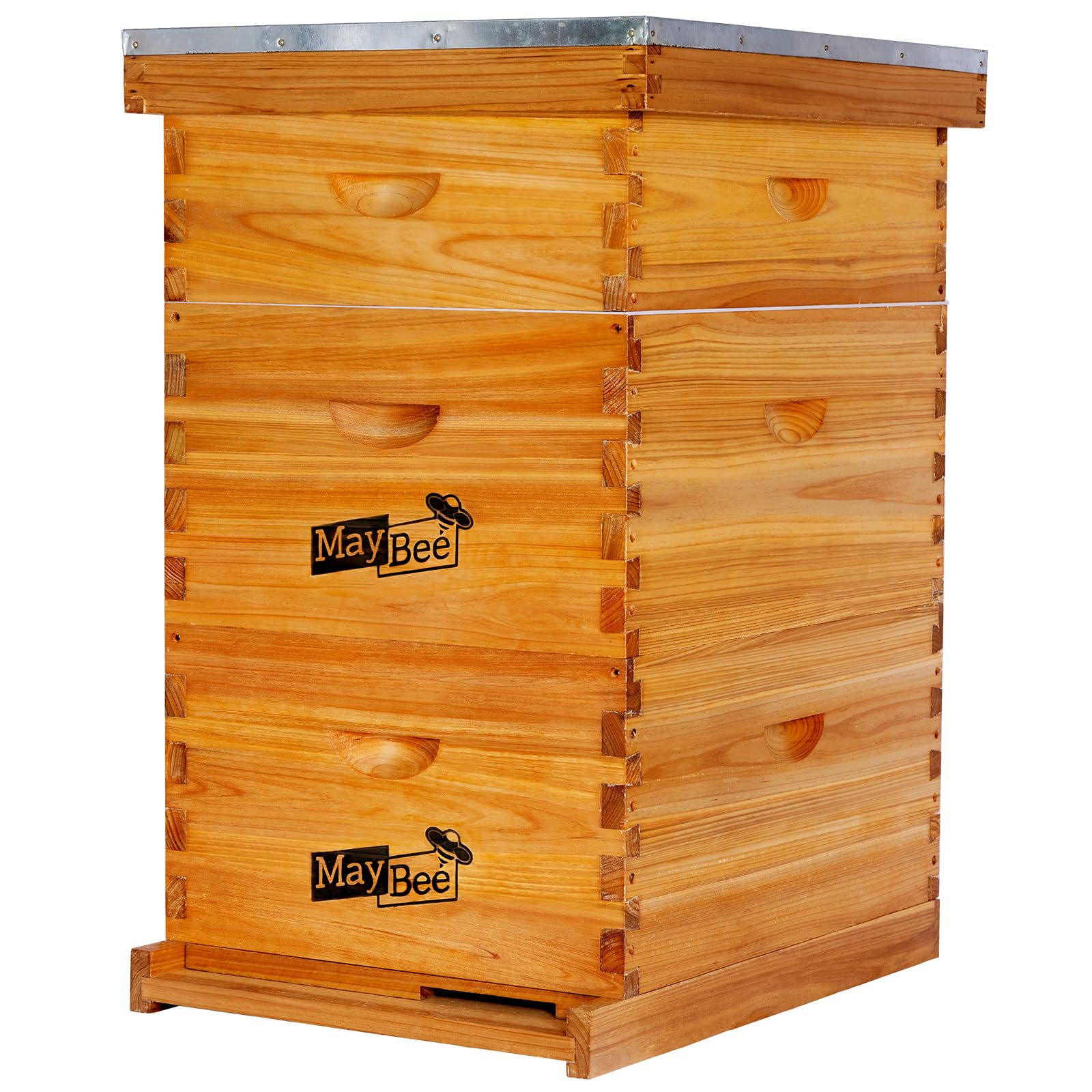
Set this next to the three-box MayBee above and the difference is one medium super. Same twice-dipped cedar boxes, same dovetails, same waxed plastic foundation, less money and less hive. For anyone deciding between the two, that really is the whole comparison.

In the box: one deep brood box and one medium super, ten frames in each with waxed foundation, a metal top cover, inner cover, queen excluder, solid bottom board and entrance reducer. The listing counts 32 pieces, and that is a genuine afternoon of glue and nails. The boxes go together quickly; the frames are what eat the time.

Two boxes make a decent home for a nucleus colony through its first summer, and the wax on the outer panels is as even as anything here, so nothing needs painting in year one. The wood is not uniform, though. Some boards carry knots and a few arrive split at the end, which is a shipping and sorting problem more than a design one, and a split panel on a dovetail is a panel you glue and clamp rather than return.

We keep this one on the list for a specific buyer: someone adding a hive to split into next spring, where two boxes and a queen excluder is all the season asks for. If it is going to be your only hive, put the difference toward the three-box version and skip the second order.

Bottom line: Worth buying as a second or third hive to split into next spring, less so as the only hive you own.

3

POLLIBEE 10-Frame 4-Layer

POLLIBEE 10-Frame 4-Layer

Hive volume per dollar

Our Score 9.4/10
Check Price

Worth Noting

  • Boards can split at the fasteners
  • Boxes need careful squaring and clamping
Wood
Cedar
Frames
20 deep + 20 medium
Foundation
Waxed plastic
Hive Boxes
2 deep + 2 medium
Read the full review

Four boxes and 40 frames for a little less than our top pick is the kind of arithmetic that gets a kit noticed. POLLIBEE ships two deep brood boxes and two medium supers in cedar with pre-cut dovetails and pre-drilled holes, which is the same shape as our top pick for less money. What you trade for that is consistency.

The boxes are ten-frame standard, with deeps at 19-7/8 by 16 by 9-5/8 inches and supers at 6-5/8 deep. The kit carries 20 deep frames and 20 medium frames with beeswax-coated plastic foundation, plus a galvanized metal top, inner cover, bottom board, queen excluder and entrance reducer. On paper it is the most hive per dollar in this group.

The wood is the variable. Cedar with knots in it can split when a screw goes in near an edge, and a deep box built from panels that are not quite square will not sit flush on the box below. Dry-fit each box on a flat surface, pre-drill everything, and clamp while the glue sets. Do that and the joints come up tight and the seams hold.

It sits in also-consider because the expensive part of a hive is not the box count, it is whether the boxes stay square for five seasons. Our top pick comes together more predictably out of the crate; this one rewards a careful hand with a lot of hive for the money. Buy it if a chisel and a clamp are things you already reach for.

Bottom line: Pick the POLLIBEE if you want four boxes and 40 frames for less than the top pick and you are handy enough to square and clamp a joint.

4

BeeCastle 10-Frame 2-Layer

BeeCastle 10-Frame 2-Layer

Budget-conscious beginners

Our Score 9.2/10
Check Price

Worth Noting

  • One deep fills fast in a good season
  • Knots can tighten the dovetail joints
Joints
Pre-cut dovetail
Coating
Soaked in beeswax
Hive Type
10-frame Langstroth
Hive Boxes
1 deep + 1 medium
Read the full review

BeeCastle's two-layer kit costs less than our top pick and asks less of you: one deep brood box, one medium super, both ten-frame, with frames and waxed foundation in the box. We think it is the right shape for a first hive if you are not certain you want four boxes of woodenware in the garage by spring. The dovetails are pre-cut, the holes pre-drilled, and every panel has been soaked in hot beeswax rather than brushed with it.

The trade-off is time. A single deep is a fine brood chamber for a new colony and a tight one by July, and that is when you order another box, which means you spend in two goes what the four-box kits ask in one. Joinery is where this one occasionally slips: a knot sitting on a dovetail corner makes the joint fight back. Dry-fit every corner before the glue comes out, and trim rather than force.

What keeps it on the list is what it costs to get started. For a second hive in the same apiary, or a swarm you need to house in a hurry, this is the box we reach for, and it takes standard Langstroth parts without argument.

Bottom line: Buy the BeeCastle two-layer kit if you want a proper waxed Langstroth hive for the least money and do not mind adding a second brood box later.

5

MayBee 10-Frame 3-Layer

MayBee 10-Frame 3-Layer

Growing colonies

Our Score 9.2/10
Check Price

Worth Noting

  • Super side panels can crack
Wood
Cedar
Joints
Dovetail, screws included
Coating
Dipped twice in beeswax
Hive Boxes
2 deep + 1 medium
Read the full review

MayBee dips its hives in boiling beeswax twice, and it shows. The coating is thick enough that the cedar grain reads straight through it, and you can skip paint for the first seasons. That double dip is why this kit costs a little more than the two-box hives here, and it is money in the right place, because the outside of a hive takes weather all year.

The layout is two deep brood boxes and one medium super, all ten-frame and standard Langstroth, with a metal top cover, inner cover, queen excluder, solid bottom board and entrance reducer included. Three boxes is the shape we suggest for anyone planning to keep the hive past its first winter: the second deep gives the colony somewhere to move and somewhere to store, and the super stays clean for honey.

Assembly is where the wax works against you. It pools in the dovetails, so corners that should slide together need a few passes with a sharp knife and a dry fit before glue. Do that and joints come up flush and square; skip it and you are forcing a box that will never sit true. We still take the wax over bare wood, since ten minutes with a knife is cheaper than repainting boxes every other year.

Bottom line: Choose the MayBee three-layer hive if your colony needs to overwinter in place and you want a finish that skips painting for a couple of seasons.

6

BeeCastle Starter Kit with Suit

BeeCastle Starter Kit with Suit

Total beginners

Our Score 9.2/10
Check Price

Worth Noting

  • Only one deep box in the kit
  • Generic one-size suit fits loosely
Extras
Tools, tote, bee suit
Frames
10 deep, unassembled
Coating
Beeswax-coated cedar
Hive Boxes
1 deep brood box
Read the full review

The hive is the part everyone remembers to order. The veil, the gloves, the smoker and a hive tool are the parts that turn a first inspection into a scramble at the kitchen table, which is why we like this bundle. BeeCastle puts an assembled, wax-coated deep brood box in the same carton as a bee smoker, a tool set in an organizer tote, a bee jacket and pants, and leather gloves.

The hive half is a single deep in waxed cedar, with ten pine frames and black waxed plastic foundation, plus the telescoping cover, inner cover, queen excluder, entrance reducer and solid bottom board. One deep gets a new colony through its early months and no further, so you will be buying a super before the honey flow. That is worth knowing before you stack this against the four-box kits on price.

The suit is the soft spot. It comes in one generic size, roomy enough to pull over clothes and not something you will still be wearing three seasons from now, and the gloves are thick. For a first year, though, having all of it arrive on the same Saturday is worth more than the upgrade you would buy separately later. The kit removes the excuse that keeps people out of the hive.

Bottom line: This is the kit we point absolute beginners to when they own nothing: hive, smoker, tools and a suit arriving together beats a better hive and no veil.

7

Hoover Hives 8-Frame Kit

Hoover Hives 8-Frame Kit

Easier lifting

Our Score 9.0/10
Check Price

Worth Noting

  • Frame joints can come apart after a season
  • Wax clogs dovetails and needs trimming
Wood
Fir, wax-dipped
Frames
24
Hive Boxes
2 deep + 1 medium
Hive Width
8-frame
Read the full review

The reason to pick this kit over any ten-frame hive here is the lift. Hoover's 8-frame boxes sit at the light end of the standard range, listed about 20% under a ten-frame hive, and a super full of honey is the heaviest thing you will handle in beekeeping. If you will be working alone, that difference decides the purchase before anything else does.

The kit is two deep brood boxes and a medium super, 24 wax-dipped fir frames with CellTech foundation, a telescoping cover, solid bottom board, queen excluder and entrance reducer. Fir dipped in wax means no finishing work before the bees go in, though the coating is generous enough that dovetails need paring before they seat.

Where it gives ground is consistency. The wax in the joints varies from box to box and the dovetails do not always line up first try, so dry-fit and trim. We still rate it the right buy for anyone whose back is the limiting factor: a hive you can lift is worth more than a tidier one you cannot, and our top pick is the better-built box only if the weight is not the problem.

Bottom line: Take the Hoover 8-frame if you work your hives alone or your shoulders have a vote, and accept smaller boxes and a little more fitting on assembly day.

8

Honey Keeper 20-Frame Kit

Honey Keeper 20-Frame Kit

Cheapest start

Our Score 8.8/10
Check Price

Worth Noting

  • Bare wood needs painting before setup
  • Dovetails can arrive out of line
Cover
Galvanized metal roof
Frames
10 deep + 10 medium
Weight
19.5 lb
Coating
None, bare wood
Read the full review

The cheapest way into a Langstroth hive here arrives as bare wood: no wax dip, no paint, nothing between the fir and the weather. Budget an afternoon, a drop cloth and a can of exterior paint before the bees come, and this kit undercuts every waxed hive on the page. That is a fair swap if you enjoy a project and a poor one if you do not.

What the money buys is a two-tier hive with ten deep and ten medium frames on plastic foundation, a telescoping galvanized metal cover, solid bottom board, queen excluder and entrance reducer. The galvanized roof is the piece we rate highest: it sheds water and shrugs off a scraper in a way a coated board top never does. Our reservation is the joinery, since dovetails that arrive slightly out of line need paring with a chisel before they seat, and the supplied nails are chunky enough that glue and pilot holes do the job better.

For a hobbyist putting two hives at the end of a garden, or someone building boxes to split into next spring, painting is a weekend you would spend anyway. Just do not skip it. Bare fir in a wet climate goes grey and soft, and a hive that rots at the bottom board is a hive you rebuild from scratch.

Bottom line: Buy the Honey Keeper if the budget rules and you are happy to spend a weekend painting bare wood before any bees arrive.

How We Tested Beehive Kits Through a Full Season

Every kit here started as a candidate on a spreadsheet. We surveyed what's actually available to a backyard beekeeper right now, then narrowed by wood type, joint style, whether frames and foundation come in the box, and price per box, since a kit that skips the frames rarely stays the better deal. That left nine kits to build and run for a full season.

Assembly happened on a garage floor and a kitchen table, always solo and always timed. I squared each box corner to corner with a speed square, ran a flashlight along every seam in a dark garage to see which joints let light through, and seated frames in each box to feel how level they actually sat. Then I loaded them up — a full box of drawn comb is heavier than most people expect, and a shaky joint announces itself the moment you lift the box by its top edge.

The hives went out to a backyard apiary facing the morning sun, where they stayed from early spring into fall. I watched bee traffic daily through swarm season, noted which boxes drew comb across the wax coating fastest, and inspected the dovetails after wind, rain, and a summer of the bees propolizing every seam shut. Value came last: what each kit included out of the box, and what I still had to buy separately.

How to Choose the Right Beehive Kit

How many boxes a colony actually uses

A Langstroth hive is modular and a colony moves upward as it grows, filling brood boxes first and putting honey in the supers above. A kit with a single deep gets a package of bees through spring and leaves you short by midsummer, which is why the four-box kits here are worth the extra assembly. Two deeps plus one or two supers covers a first season without a second order.

The footprint is standard, roughly 19-7/8 by 16-1/4 inches, so boxes from another maker will stack later. Match the frame count and the finish if you care how the apiary looks; a waxed box sitting on a painted one is visible from the gate.

Wax, paint, or bare wood

How a hive is finished decides what you do the weekend before the bees arrive. A dipped hive has been soaked in hot beeswax, which protects the wood and puts off painting for a season or two. Paint is skin-deep and needs redoing. Bare wood, like the Honey Keeper, is the cheapest route but wants exterior paint or stain before it goes outdoors.

Wax has one catch, and it is the thing buyers get wrong: it thickens dovetail joints. Test-fit every corner and pare the wax back with a knife before glue, or you will be hammering a joint that should slide.

Assembly is the first job, and the frames are the slow part

Boxes with dovetails and pre-drilled holes take minutes each. The frames do not. A 40-frame kit means 40 small assemblies, each needing glue, nails and a foundation sheet, and that is where a weekend disappears. Easy assembly in a product listing almost always describes the boxes, not the frames.

Plan two sessions, buy wood glue and a rubber mallet, and build the frames indoors at a table well before your bees are due. A frame that comes apart during an inspection costs far more time than the build ever did.

8-frame or 10-frame: decide by lifting

The difference between these two standards is weight and capacity. Ten-frame boxes are the common standard and hold more honey, but a full super is the heaviest thing you will handle. Eight-frame hives such as the Hoover carry about 20% less and take eight frames per box instead of ten, at the cost of capacity and a separate equipment line.

If you will lift supers alone, or your back already has a say, choose 8-frame once and stay there. Mixing means two sets of frames and two kinds of box in the shed, and neither fits the other.

Frequently Asked Questions

Final Verdict

The Honey Lake kit is the one we point a new beekeeper to. Four waxed boxes and 40 frames carry a colony from a spring package to a full honey super without a second shopping trip, and the dovetails and pre-drilled holes make the build predictable rather than fiddly.

Two situations change that. If you lift supers alone, take the Hoover 8-frame and accept smaller boxes. If you own no gear at all, the BeeCastle all-in-one puts a suit, smoker and tools in the same carton as the hive.